Article courtesy MIRS News for SBAM’s Lansing Watchdog newsletter
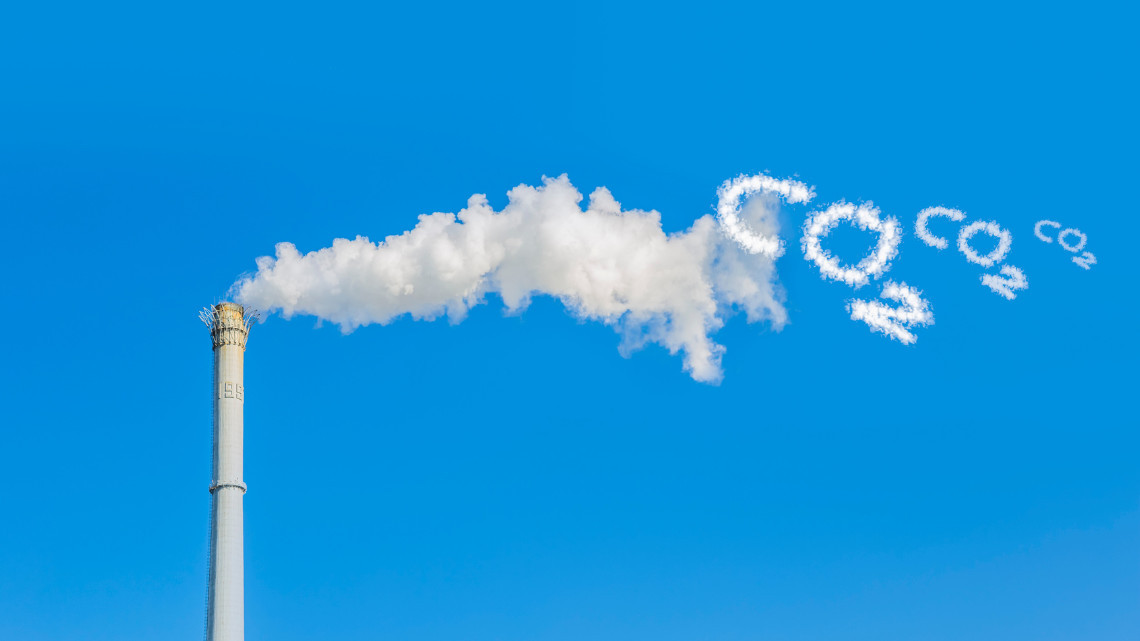
The Senate passed bills Thursday looking to speed up carbon capture and storage permitting in Michigan, allowing industries to turn their carbon dioxide (CO2) emissions into a liquid-like form, pumping it thousands of feet underground.
CCS technology – currently permitted solely by the federal Environmental Protection Agency (EPA) – can be used by automotive producers, cement manufacturers and natural gas plants. Under Thursday’s bills, SB 394 , SB 395 and SB 396, CCS developers could be permitted through the state’s environmental department, which can charge operators up to 32 cents per ton of CO2 stream injected underground.
Two bills passed 29-7 and the third got the OK 31-6.
CCS technology offers a path for natural gas to continue under Michigan’s renewable energy mandates signed by the Governor in fall 2023. While the recent law requires the state’s electricity providers to depend 100 percent on “clean energy” by 2040, natural gas plants can fall under the definition if they’re utilizing CCS with a 90 percent capture rate.
“I do not support the energy mandates approved by Michigan Democrats here a few years ago, but I support this legislation,” said Sen. Thomas Albert (R-Lowell) during Thursday’s vote. “Injection wells have been utilized in Michigan for many decades and have been done safely. These wells are thousands of feet below the Earth’s surface, underneath many layers of impenetrable substrate formations.”
Albert also imagines the legislation increasing productivity of Michigan’s oil and gas wells, boosting state revenue. However, he did claim that Democrats’ policies from 2023 outlaw oil production that uses CCS from being counted as “clean energy.”
“I have mixed feelings about this bill. On one hand, the policy itself makes practical sense. On the other hand, looking at the bill in the context of our current energy policies in Michigan, the benefits become more convoluted,” Albert said. “I support this bill based on its own merits. That being said, I look forward to seeing our unsustainable energy policies repealed next term.”
While Albert still approved Thursday’s bills despite his mixed emotions, others did not.
Sens. Rosemary Bayer (D-Keego Harbor), Stephanie Chang (D-Detroit), Erika Geiss (D-Taylor), Jeff Irwin (D-Ann Arbor), Jonathan Lindsey (R-Coldwater), Ed McBroom (R-Waucedah Twp.) and Sue Shink (D-Dexter) opposed SB 394 and SB 396. All in the group but Lindsey opposed SB 395 as well, clarifying that carbon sequestration bills don’t fall under the same restrictions on petroleum and crude oil sales. Sen. Jim Runestad (R-White Lake) did not vote on the bills.
Irwin described carbon capture as an expensive and potentially dangerous “boondoggle.”
“It is certain to keep the party going for fossil fuel companies who don’t want to reckon with the damage to our health and our climate that their operations are causing,” Irwin said. “If we’re using more carbon, generating more pollution just to put this other pollution under the ground, that’s a foolish tradeoff, and we shouldn’t allow it here in Michigan.”
Multiple amendments were offered and failed.
McBroom offered a misfired amendment to sunset the Michigan Department of Environment, Great Lakes and Energy’s rule-making authority on the projects at 12 years, then requiring the Legislature to re-evaluate the subject and EGLE’s practices.
He additionally suggested that state revenue collected from the projects go toward the House’s proposed “Neighborhood Roads Fund,” designed to distribute money directly to local governments to repair roads not eligible for federal aid.
Shink wanted EGLE to more easily reject applicants based on concerns they flag surrounding drinking water, public health and the environment. Furthermore, she wanted operators to remain liable for their projects for up to 50 years following the final injection of CO2.
Both Shink and Bayer wanted EGLE to charge $1.20 per ton for CO2 injections.
“I think the reason why we’re doing what we’re doing today is because of federal tax credits. It’s because some people are going to get enormously wealthy from tapping into this scheme of carbon sequestration,” Lindsey said in his no-vote explanation.
Lindsey said he doesn’t think for a minute the legislation would be debated if it weren’t for “people who are very important, very influential and (who) have a lot of resources on both sides of the political aisle” making the case for fast-tracking access to federal tax credits.
“The people will be paying the cost of this,” Lindsey said. “And I will not buy into the environmental alarmism of how bad could carbon sequestration be, but I will point out, it’s a fair concern.”
Meanwhile, Thursday’s Senate vote was celebrated by the MI Success coalition, standing for “Safe Utilization of Carbon Capture for Environmental and Economic Success.”
The coalition includes organizations and companies like Hemlock Semiconductor, the Michigan Chemistry Council, DTE, Consumers Energy, the Michigan Building Trades Council and Dow.
“Michigan no longer has to stand by watching neighboring states protect their air with this high-tech technology while also snagging economic investment and good-paying jobs,” said John Sellek, the MI Success spokesperson. “We thank the Senate for approving the three-bill legislation and look forward to House action.”
Click here for more News & Resources.