Division In The Great North: How Quickly Should An Ice Storm Supplemental Get Done?
August 18, 2025
Northern Michigan legislators are becoming divided over how fast financial support should be passed for communities affected by March’s ice storms. Sen. John Damoose (R-Harbor Springs) says an aid bill passed by the House isn’t yet ready, while others are calling on the Senate to move with more urgency.
“I’m unsure why the storm relief bill is stuck in the Senate. If there are issues with it, they should be sorted out in the committee process, but we can’t even get a hearing scheduled. The data for the FEMA request has already been gathered and approved, but it doesn’t cover individuals,” said Sen. Michele Hoitenga (R-Manton) in a statement she sent to MIRS. “The people I serve need action now, and politics shouldn’t interfere with the urgent help they need.”
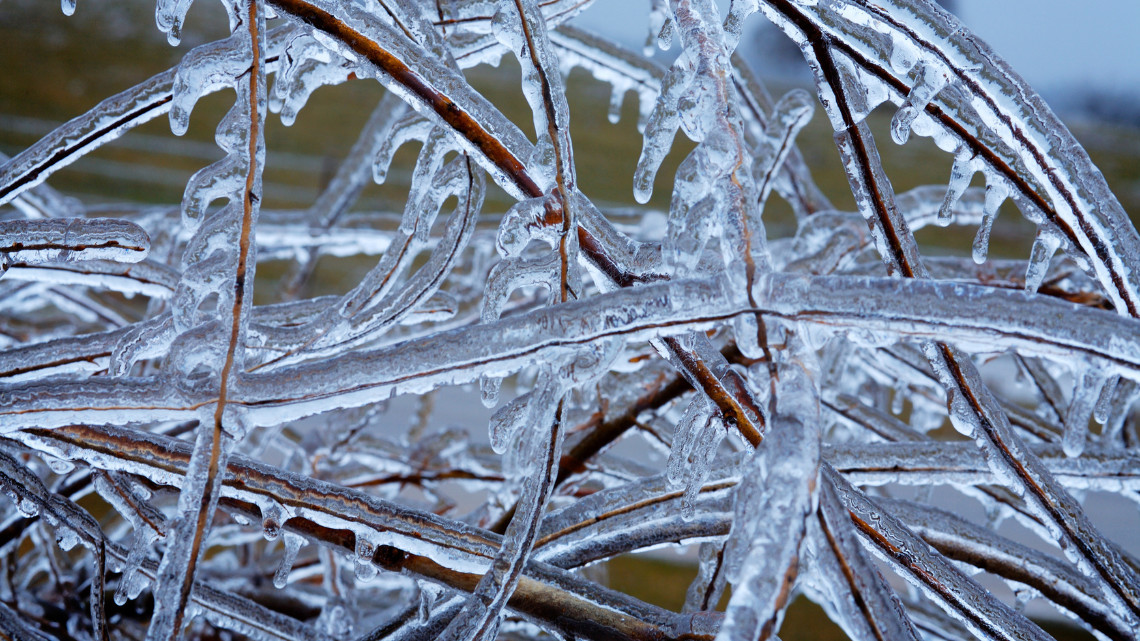
In late March, multiple Northern Michigan communities were struck by freezing rain, more than an inch thick in certain areas. The icing overburdened and obstructed trees, power lines and other infrastructure items. In early May, Michigan Public Radio reported how the state’s Department of Natural Resources (DNR) was still in the process of clearing nearly 700 miles of state forest roads that the icing’s impacts made “impassable.”
On May 7, the House passed 107-1 legislation providing $100 million from the state’s General Fund to affected communities.
In a Tuesday interview with MIRS, Damoose explained he would have loved to have a check written on “day one when the ice was still melting.” However, he also noted that “there is a procedure you have to go through,” especially when federal dollars are being discussed.
“I think the process is working as it’s supposed to work. I expect that we’re going to get some movement out of this in the next couple of weeks,” Damoose said. “I haven’t seen anybody pushing back on wanting to help. It’s just the process can take long and take a while, and it’s going to take a little longer this year in fact.”
On July 23, President Donald Trump made assistance available on a cost-sharing basis through the Federal Emergency Management Agency (FEMA) for the state, tribal and impacted local government bodies.
However, Trump initially rejected Michigan’s request for individual assistance that could cover temporary housing and home repairs. Damoose called things a complicated interplay between the state and federal government.
“It’s actually good to wait, because that tweaks the type of funding we should seek right now. I’m pushing so hard on individual assistance because it doesn’t look like we’re going to get any of that from the federal government,” Damoose said. “Everything that’s coming from the federal government looks like it’s more going to be filtered through the counties and local units of government, which is a different deal than actually helping those homeowners and property owners who’ve had to pay through the teeth to clean up.”
On Wednesday, first-year Rep. Parker Fairbairn (R-Harbor Springs) shared a Facebook post from Hoitenga. In it, she said the overall Senate’s excuses and inaction on Fairbairn’s HB 4328 “is only letting down the people I fight for daily, and I take that personally.”
Fairbairn said to MIRS Friday that all he’s asking for is that the Senate Appropriations Committee bring HB 4328 up in committee and allow minor tweaks to be done.
“When a natural disaster happens, the response time really matters,” Fairbairn said. “It has sat in the Senate for three months. They’ve had every opportunity to make tweaks to this . . . they have the ability to make these changes, and they haven’t even brought it up.”
He said he wants the ability for Northern Michigan residents to come down and testify on his HB 4328, like the area’s emergency managers.
“We’re in agreement that this was a natural disaster. They’ve gotten federal dollars now, and to me, it’s ridiculous,” Fairbairn said. “The state – we’re sitting on our hands right now, and I think we’ve got the ability to help people right now.”
In September 2020, the Governor signed $6 million from the General Fund to support flooding in Midland and Gladwin Counties, when the Edenville and Sanford Dams failed to contain heavy rain in May of that year. At the time, a Midland Republican, past Sen. Jim STAMAS, chaired the Senate Appropriations Committee.
For leaders on the Senate Appropriations Committee, they could be spending this time attempting to collect a clearer picture on what Northern Michigan’s remaining needs are, especially if there’s a chance the state can successfully reverse Trump’s decision to reject individual assistance.
Also, $100 million is much larger than the $6 million from about five years ago for the Midland area flooding. With the state’s share of Supplemental Nutrition Assistance Program (SNAP) benefits projected to increase, as well as its administrative costs for Medicaid, some legislators might be questioning how digestible a $100 million supplemental is right now.
Article courtesy MIRS News for SBAM’s Lansing Watchdog newsletter
Click here for more News & Resources.