Pay Is Just One of the 6 Dimensions of Compensation™ – Here’s How Small Businesses Win the Other Five
October 1, 2026
Compensation isn’t a number. It’s six of them. Understanding what each employee values most is how we, at RED66 Marketing, have built a culture that people don’t want to leave. Here you’ll find insights and ways that your small business can do the same.
As a small business owner, you’ve likely had a moment where a great candidate walks away for a bigger paycheck, or a talented employee leaves for higher pay. That stings, and it can feel like the game is rigged before you even get to play.
There’s a shift taking place that changes the game for business owners everywhere: compensation is never just a number. The financial part is only one piece of how people experience value at work, not a bigger “total compensation” figure made by adding up salary, health care, taxes and paid time off. It’s about what actually drives attraction, retention and performance, and builds a great culture along the way. When you understand that, small and mid-sized businesses stop competing on a single line item they may never win, and start competing on the full picture, where they often have just as much, if not more, to offer. At RED66 Marketing, we’ve spent nearly three years putting this into practice, and it’s reshaped how we lead, inspire, and compensate our team.
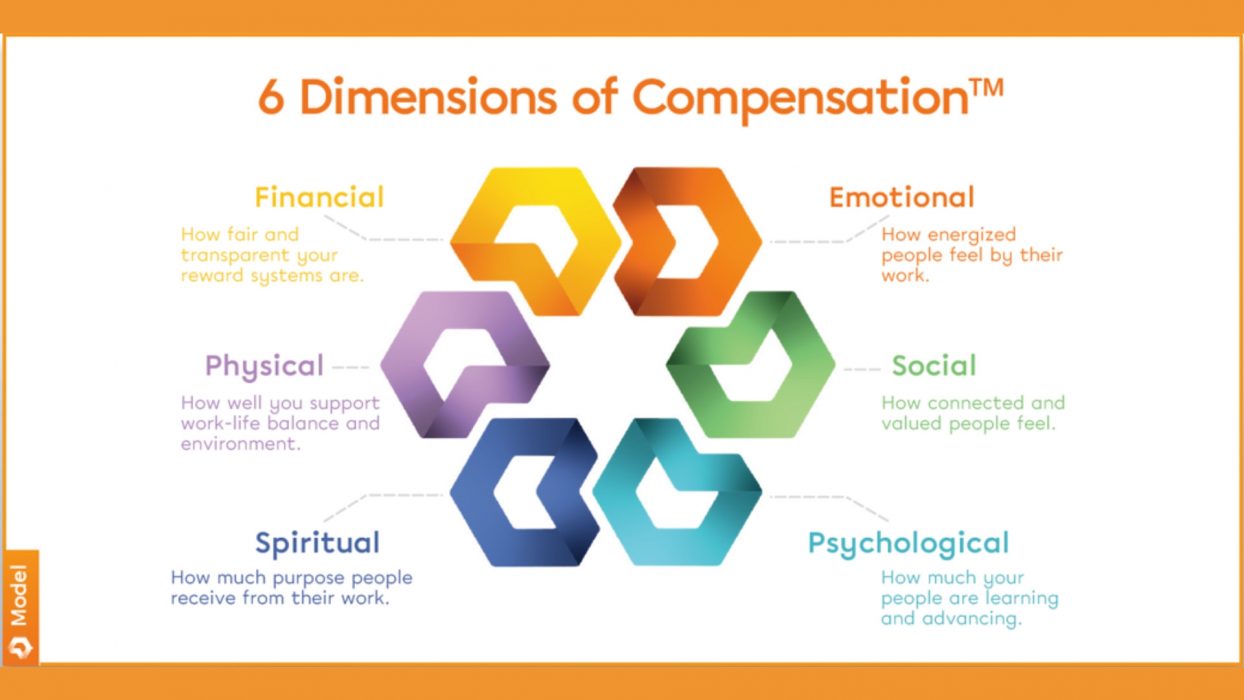
Jonathan King and Tonia Butterworth of Get Strategy, Done® built a framework for exactly this. The 6 Dimensions of Compensation™ model breaks total compensation into six dimensions: Financial, Emotional, Physical, Spiritual, Social, and Psychological. The model makes the case that every employee weighs these differently. One person may be most motivated by financial transparency and fairness, while another cares more about feeling connected to their team or learning and advancing in their role. Neither is wrong, they’re just valuing different dimensions.
For a small business owner, that distinction matters: you may not be able to match a larger salary, but understanding which dimensions matter most to your candidates and team lets you build a culture that speaks directly to what they value, which something more generic organizations rarely bother to do.
Within RED66 Marketing, we have people on our team who’ve turned away from higher pay elsewhere for a workplace where they’re cared about, have a purpose in the work they do, and are encouraged to learn and grow personally and professionally.
The 6 Dimensions of Compensation™
1. Financial. How fair and transparent your reward systems are. This is the dimension everyone thinks of first, and it does matter. But it’s one of six, not the whole conversation. Being clear and honest about pay, and how it’s decided, builds trust even when the number itself can’t compete with a larger employer. At RED66, we share high-level company performance with the whole team, so everyone sees how the business is actually doing. That layer of transparency builds trust in a way a bigger number on its own never could.
2. Emotional. How energized people feel by their work. This is about the day-to-day experience of the job itself. People can leave work feeling drained or fueled. When a small business owner or leadership team is paying attention to morale in real time, they have an advantage a distant HR department simply doesn’t. Our team is always sharing wins and the impact of the work being done through team and department meetings, group chats, and Slack. People feel the energy of their work landing somewhere.
3. Physical. How well the workplace supports work-life balance and environment. Flexibility for employees to handle real life things that happen every day, like doctor appointments, kids’ activities, or being sick. Creating a workplace that doesn’t run people into the ground is also compensation, even though it never shows up on a pay stub. As an agency, RED66 offers remote and hybrid work. When someone has a sick kid, a pet emergency, a doctor’s appointment, or just needs a mental health day, flexibility comes first. Life happens. Work-life balance is a teeter-totter, not a destination, and supporting the team through it matters more than any single perk.
4. Spiritual. How much purpose people receive from their work. Employees, especially younger generations, want to know their work matters to someone. As a small business owner or leader, you’re far better positioned to connect a person’s daily tasks to a real outcome than a large organization where that line is easy to lose. At RED66, sharing client wins with the entire team keeps everyone connected to the outcome of their work, not just the task in front of them. This includes sharing things like when a designer nailed a concept, a paid ads campaign landed a huge lead, or that big website project officially launched.
5. Social. How connected and valued people feel at work. Employees often spend more time with people at work than with their own families or friends. Most people don’t want to be a nameless face on a shop floor or hidden in a cubicle. This is where small teams have a natural edge. It’s hard to feel anonymous on a team where the owner knows your name, your work, and what you’re proud of. Our team meetings include shout-outs, and we host monthly virtual happy hours with games, a digital book club, a fun chat channel for sharing pet photos and life updates, and at least two full-team get-togethers a year. There is nothing like standing back and watching your team connect, laugh, and have fun together.
6. Psychological. How much your people are learning and advancing. Growth doesn’t require a formal ladder or a huge training budget. It does require a leader who’s paying attention to where someone wants to go next and giving them a way to see their own progress along the way. My mantra as a business owner is that professional development is a personal responsibility. We expect and encourage our team to attend webinars, read articles, and go to events to keep learning and growing. For accountability and support, and so they have a clear goal, we work with each person to create a personal and professional goal every quarter. When they grow, the company grows.
Different People, Different Dimensions
This isn’t about memorizing all six dimensions. This is about finding out which ones matter most to each person you lead. That takes real conversation, not an assumption that everyone wants what you want. No two employees are alike, and each person values different things about their work. Ask people directly what makes them feel valued, energized, or if they think their work matters. For nearly three years, this understanding has shaped the ongoing conversations that RED66 uses to build individual employee roadmaps.
Building a culture that flexes to understand people and what matters most to them is what separates a business that retains and attracts great people from one that keeps rehiring the same role. If you’re a small business owner competing for talent against bigger budgets, this is where you stop trying to win a fight over a single number and start building from within.
Ways to Gather Employee Input
You can start with a list of these six dimensions and ask employees to rank them on a scale of one to five. While some may rank them all a five, you may be surprised by what matters most to your people. This same kind of ranking exercise is part of how RED66 Marketing builds its own employee roadmaps.
As you take an honest look at all six dimensions across your team, consider these questions as a few thought starters:
- Where are you already strong?
- Where have you assumed pay was the whole story, when what someone actually needed was to feel more connected, more purposeful, or more like they were growing?
- Would a little more workplace flexibility help an employee thrive instead of withdrawing?
The Impact of 6 Dimensions of Compensation™ on Company Culture
Culture is a driving factor in your employer brand. It’s what attracts or repels talent. These six dimensions are directly connected to creating a place where people want to work, feel encouraged and supported, and can do their best work alongside a team that has their back. Culture comes from within, and it’s multi-dimensional. It’s a big part of why RED66 Marketing has been recognized with an A+ Human Score rating and a Platinum Culture Award from Agency Workplace.
The businesses that attract and keep great people aren’t always the ones that pay the most. They’re the ones that understand compensation was never just financial, and who take the time to find out what their people actually value. That’s a competitive advantage and it’s one every small business owner already has the tools to build.
The 6 Dimensions of Compensation™ Model referenced in this article was developed by Jonathan King and Tonia Butterworth of Get Strategy, Done. Learn more at getstrategydone.com.
By Rebecca Dutcher, CEO & Founder of RED66 Marketing; originally published in SBAM’s September/October 2026 issue of FOCUS magazine.
Click here for more News & Resources.