Eli Savit (D)
Attorney General Candidate
Explore Eli Savit’s positions and priorities on issues impacting Michigan’s small business community and the role of the Attorney General’s office.
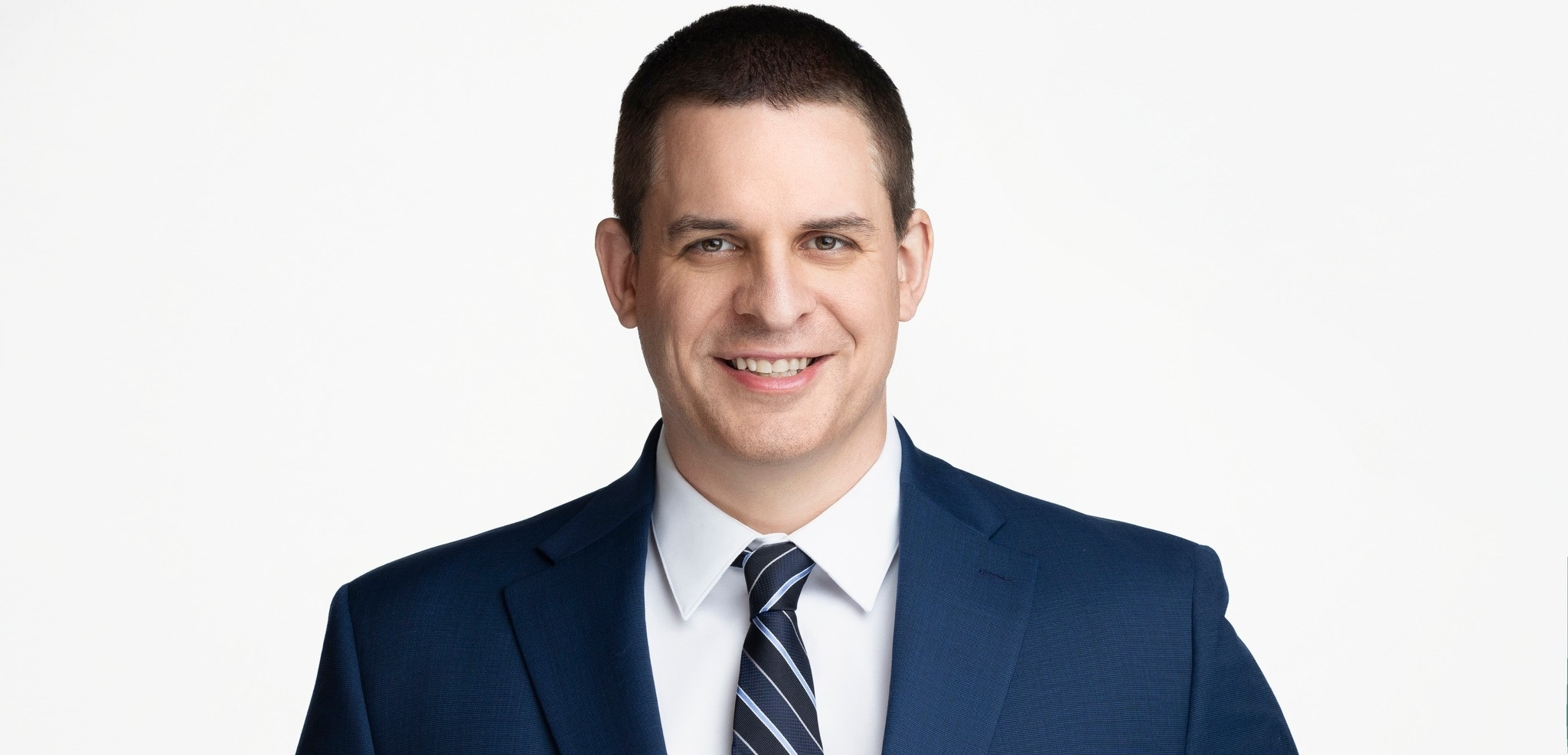
Explore Eli Savit’s positions and priorities on issues impacting Michigan’s small business community and the role of the Attorney General’s office.
| QUESTION 1: Do you believe the Attorney General’s responsibilities include protecting and supporting Michigan’s small business owners as much as any other citizen? |
| Yes. Small businesses are job creators. They are cornerstones of our communities. And small business owners deserve unequivocally deserve to be supported and protected just like any other Michigander. As Attorney General, I look forward to working with business owners to provide the support necessary to ensure that small businesses can thrive–including, for example, working to eliminate any unnecessary regulatory legal bureaucratic hurdles that prevent small businesses from growing. |
| QUESTION 2: Do you believe and will you operate your office under the premise that business owners are entitled to a presumption of innocence in the face of allegations and complaints? |
| Of course. The presumption of innocence applies to everyone–and business owners are no exception. Not only will I operate the AG’s office this way, it is how I currently operate the Washtenaw County Prosecutor’s Office. In Washtenaw County, we maintain an Economic Justice Unit that focuses on worker and consumer protection issues. Just like with any other matter, however, we are cognizant of the burden of proof and the presumption of innocence, and conduct ourselves accordingly. |
| QUESTION 3: Do you believe and will you operate your office such that when reviewing and/or investigating accusations or complaints against small businesses or their owners, it is the burden of the accuser to prove wrongdoing, not the accused to prove their innocence. |
| Of course. And again, I believe my track record bears this out. Our Economic Justice Unit strives to be fair to all involved, and we always thoroughly investigate complaints (and provide businesses an opportunity to respond to any allegations or complaints) before we move forward with an enforcement action. We never simply take allegations as true. We are always cognizant of the burden of proof. And even where it appears that a complaint may have merit, we always provide businesses an opportunity to respond and provide additional evidence. This is how I will approach the work as AG. |
| QUESTION 4: What steps will you take to help small businesses prevent and respond to fraud, identity theft, cyber threats, and scams targeting small businesses? |
| As an initial matter, I plan to continue to make combatting organized retail fraud a priority for the Attorney General’s Office. The Organized Retail Crime initiative in the AG’s office is one that needs to be supported and expanded upon, and I will.
More broadly, the issues referenced in this question are poised to be of increased importance in the coming years–particularly with widespread access to artificial intelligence tools. The widespread availability of these powerful tools is making scams and fraud ever-more sophisticated, and easier to carry out. To address these emerging threats, my plan is severalfold. First, on the criminal side, we must of course hold scammers, fraudsters, and other bad actors accountable when they target small businesses. I will invest resources in enforcement, and will send a strong message that those who unlawfully target small businesses will be held accountable. Second, it is simply true that many scammers are not local, and frequently operate from overseas. But we need to send a message that no matter where one is in the world, they will face justice if they target Michigan businesses. As a policy matter, I will seek global extradition for any scammer or fraudster who targets Michigan small businesses, and will work with U.S. Marshals and international authorities to ensure that these criminals are captured and brought to justice in Michigan. Third, I will invest in prevention. Our office will push out public information about emerging scams, and will maintain an open line of communication with other stakeholders–including AGs across the country, the small business community here, and law-enforcement–to detect emerging scams and schemes and warn the public accordingly. Fourth, I will seek to ensure that powerful artificial intelligence tools cannot be used unlawfully and irresponsibly by bad downstream actors. That includes seeking appropriate regulation of AI companies–by exercising the AG’s bully pulpit, rulemaking, and/or litigation authority–to enact appropriate safeguards protecting both businesses and citizens alike. |
| QUESTION 5: Under a procedural challenge of the Earned Sick Time Act, the current Attorney General worked to invalidate a state law from 2018 creating months of uncertainty and ultimately a damaging resolution for small businesses.
Please describe your philosophy regarding your obligation to support and defend existing law that you are personally opposed to. |
| One of the Attorney General’s clients is the State of Michigan. Pursuant to that duty of representation, the AG has an obligation to defend the state’s laws–even if the AG disagrees with the law itself. And as Attorney General, I will defend our state’s laws, even when I personally disagree with them.
That said, the Attorney General also represents the People of the State of Michigan, and swears an oath to defend both the Michigan and federal constitutions. There may be rare situations that arise when it appears that (1) a law is unconstitutional, and (2) that its enforcement would harm the People. In such rare situations, I believe our office has a dual duty. We must continue to fulfill our duty to defend a validly enacted state law, pursuant to our obligation to represent the State. But we also have a duty to represent the People, and to defend the constitution. In those rare circumstances, I would therefore consider putting up a “wall” in our office. Certain attorneys would be assigned to one side of the wall, to zealously defend the state law. Others would be assigned to the other side of the wall, where they would represent the People and seek to defend the Constitution. These teams would be kept separate, and each would zealously represent the relevant AG client (the State on the one side; the People on the other). I will emphasize, though, that I anticipate such situations would be rare. And I would not consider taking a dual position in a case simply because I disagree with a law. I am not running for Legislature. It is not appropriate to have any part of my office support a challenge to a law simply because I personally disagree the policy. I would only take that dual position if do so if there are legal (not policy) infirmities with the law–most prominently, where it appears that the law is unconstitutional. |
| QUESTION 6: The Michigan Consumer Protection Act currently contains exemptions for businesses operating under the regulatory oversight of other state or federal agencies to avoid duplicative litigation and regulatory enforcement. There have been ongoing efforts to judicially and legislatively strip those exemptions, which would open many small businesses up to class-action lawsuits even if they are in full compliance with their primary state regulators.
Do you support maintaining these historical exemptions, or do you believe the Attorney General’s office should have duplicative jurisdiction to pursue consumer protection claims against already state-regulated small business sectors? |
| Though I do not support exempting otherwise-regulated businesses from the MCPA entirely, I do believe that the relevant exemption–which provides that the MCPA does not cover a “transaction or conduct specifically authorized” by state or federal law–is an important and common-sense exemption. As written, that exemption provides that when the government has specifically authorized a particular business practice, a business cannot then be sued for engaging in that practice.
In plain English, it means that when the government regulator has told a business they can do something, they can’t be sued for doing it. That makes sense (and is only fair). I do not support the wholesale elimination of that exemption, as I believe it makes sense as written. |
| QUESTION 7: Attorneys General frequently sign onto headline-grabbing multi-state lawsuits targeting national issues, which can siphon resource focus away from local administrative backlogs or specific Michigan statutes.
When deciding to join multi-state lawsuits or national litigation, how will you weigh the expenditure of Michigan taxpayer resources and AG staff time against the direct, tangible benefits to the citizens and small businesses within our state? |
| My philosophy with respect to multi-state lawsuits is simple. When faced with the decision whether to join a lawsuit, I will always ask two questions: (1) Has a law been violated? (2) Does that violation of the law harm the people of the State of Michigan?
If the answer to either of those questions is “no,” I will not join the lawsuit. If the answer to both questions is “yes,” I will consider joining it–though there may still be considerations that would ultimately lead me to conclude that joining the lawsuit is not an appropriate use of state resources (for example, if the harm done to Michigan can be better addressed through legislation or a pre-suit resolution). Fundamentally, I do not believe in joining lawsuits simply to grab headlines or to get publicity. The Attorney General should pursue a lawsuit only if it is solidly grounded in the law, and if winning that lawsuit will benefit the people of Michigan. |
| QUESTION 8: Independent contractors are a vital part of the small business ecosystem as they are both small businesses themselves and are commonly utilized by small businesses. The legal definition of an employee vs. an independent contractor has become a major battleground. Small businesses across Michigan heavily rely on independent contractors for specialized, flexible work.
Will you commit to protecting the autonomy of independent contracting relationships against restrictive classification tests and the narrowing of classification interpretations? |
| I understand the importance of independent contracting relationships for small businesses, and I also believe that actual employees are entitled to the benefits the law provides them. I know that the distinction between an employee and an independent contractor can be confusing and create uncertainty amongst businesses and workers alike. I would support clear and fair classification tests that protect workers but also do not unnecessarily undercut businesses’ ability to use independent contractors where appropriate. |